

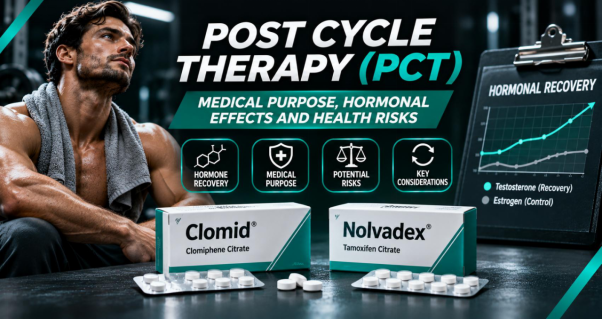
Post Cycle Therapy (PCT) is a term commonly used in bodybuilding communities to describe attempts to address hormonal changes following the use of anabolic-androgenic steroids.
Anabolic steroid exposure can interfere with the body’s natural hormone regulation, particularly the production of testosterone. These changes may affect reproductive health, energy levels, mood and other physiological functions.
Medications such as Clomiphene and Tamoxifen are frequently discussed in relation to PCT. However, their medical applications, mechanisms of action and potential adverse effects differ. Neither medication should be considered a guaranteed solution for restoring natural hormone production.
This article examines PCT from an educational and medical perspective, covering hormonal suppression, commonly discussed medications, potential health risks and the importance of professional medical assessment.
What Is Post Cycle Therapy (PCT)?
Post Cycle Therapy, commonly abbreviated as PCT, is a term used to describe approaches intended to address hormonal disruption following anabolic steroid exposure.
The body’s endocrine system regulates hormone production through a complex feedback mechanism involving the hypothalamus, pituitary gland and reproductive organs.
Anabolic-androgenic steroids can interfere with this system by suppressing signals responsible for natural testosterone production.
As a result, some individuals experience changes in hormone levels after stopping exposure. The extent and duration of these changes vary depending on individual circumstances, medical history and the substances involved.
It is important to understand that PCT is a bodybuilding term rather than a single standardised medical treatment. There is no universal protocol that guarantees hormonal recovery for every individual.
Why Hormonal Suppression Can Occur
Natural testosterone production is regulated through the hypothalamic-pituitary-gonadal (HPG) axis.
The hypothalamus releases gonadotropin-releasing hormone (GnRH), which signals the pituitary gland to release two important hormones:
- Luteinising hormone (LH).
- Follicle-stimulating hormone (FSH).
LH stimulates testosterone production in the testes, while FSH contributes to sperm production and reproductive function.
When external anabolic-androgenic steroids are introduced, the body’s hormonal feedback system can reduce the signals responsible for natural testosterone production.
This suppression may lead to:
- Reduced natural testosterone levels.
- Changes in sperm production.
- Reduced testicular function.
- Changes in libido and sexual health.
- Fatigue and reduced energy.
- Mood changes.
- Fertility difficulties.
The degree of suppression is not identical in every individual. Hormonal recovery can also be unpredictable, and some cases require medical investigation and ongoing care.
The Medical Purpose of PCT
The medical concerns commonly associated with PCT involve the body’s ability to restore normal hormonal function following exposure to external androgens.
However, hormonal recovery is not simply a matter of taking medication after steroid use.
A healthcare professional may need to investigate whether testosterone levels are low, whether the pituitary gland is functioning appropriately and whether other medical conditions are contributing to the symptoms.
Medications discussed in bodybuilding-related PCT conversations have recognised medical uses, but their suitability depends on the patient’s diagnosis and circumstances.
There is no guarantee that a particular medication will restore normal hormone levels or fertility after anabolic steroid exposure.
Commonly Discussed PCT Medications
Two medications frequently discussed in relation to PCT are Clomiphene and Tamoxifen.
Both belong to a group of medicines known as selective oestrogen receptor modulators (SERMs). However, they have different clinical applications and should not be treated as interchangeable.
Clomiphene (Clomid)
Clomiphene citrate is a medication primarily associated with the treatment of certain forms of female infertility.
It acts on oestrogen receptors and influences hormonal signalling through the hypothalamus and pituitary gland.
Its effects on gonadotropin signalling are the reason it is discussed in some medical and bodybuilding conversations involving testosterone production.
However, Clomiphene is not a universal treatment for hormonal suppression following anabolic steroid exposure. Its use in men depends on individual clinical circumstances and requires professional assessment.
Potential adverse effects can include:
- Headaches.
- Dizziness.
- Mood changes.
- Visual disturbances.
- Gastrointestinal discomfort.
Visual symptoms require prompt medical attention.
For product-category reference, see Clomid.
Tamoxifen (Nolvadex)
Tamoxifen citrate is another selective oestrogen receptor modulator.
It is primarily used in the treatment and prevention of certain types of hormone-sensitive breast cancer. Its medical applications are different from those of Clomiphene.
Tamoxifen affects oestrogen receptor activity in different tissues. This selective activity explains why it has specific clinical applications and why it is also discussed in bodybuilding-related hormonal recovery conversations.
However, its use following anabolic steroid exposure is not a universally established treatment and should not be approached as a self-directed recovery method.
Potential adverse effects include:
- Hot flushes.
- Nausea.
- Fatigue.
- Changes in mood.
- Visual disturbances.
- Increased risk of blood clots.
Serious complications, including blood clots, require appropriate medical attention.
For product category reference, see Nolvadex.
Clomid vs Nolvadex: Understanding the Differences
Although Clomiphene and Tamoxifen are both classified as selective oestrogen receptor modulators, their medical uses and pharmacological characteristics are different.
Generic names: Clomid is associated with Clomiphene citrate, while Nolvadex is associated with Tamoxifen citrate.
Medical applications: Clomiphene is primarily used in certain infertility treatments. Tamoxifen is primarily used in specific breast cancer treatments and prevention.
Mechanism of action: Both influence oestrogen receptor activity, but their effects vary across different tissues and clinical contexts.
Potential adverse effects: Both medications can cause side effects, but their risk profiles are not identical. Tamoxifen has recognised risks involving blood clots, while Clomiphene can cause visual disturbances and other adverse effects.
Clinical suitability: Neither medication is automatically appropriate for every individual experiencing low testosterone or hormonal suppression.
These differences demonstrate why medication selection requires a proper medical assessment rather than assumptions based on bodybuilding discussions.
Potential Side Effects and Health Risks
PCT-related medications are prescription medicines with recognised risks. Their use without appropriate medical assessment can introduce additional health complications.
Potential concerns associated with these medications include:
- Changes in mood and emotional wellbeing.
- Headaches and dizziness.
- Visual disturbances.
- Gastrointestinal discomfort.
- Changes in reproductive function.
- Blood clot complications associated with Tamoxifen.
Anabolic steroid exposure itself can also have significant health consequences, including cardiovascular complications, abnormal cholesterol levels, liver problems and reproductive health difficulties.
Taking additional medication does not automatically eliminate these risks.
Anyone experiencing severe symptoms, including chest pain, breathing difficulties, sudden visual changes or signs of a blood clot, should seek urgent medical attention.
Hormonal Recovery and Medical Assessment
Hormonal recovery following anabolic steroid exposure can vary significantly between individuals.
Some people may experience a gradual return towards normal hormone levels, while others may have prolonged suppression requiring medical investigation.
A healthcare professional may consider several factors during an assessment, including:
- Total testosterone levels.
- Free testosterone where appropriate.
- LH and FSH levels.
- Oestradiol where clinically indicated.
- Prolactin where relevant.
- Sperm analysis when fertility is a concern.
- Medical history and current symptoms.
The interpretation of these results depends on the individual’s circumstances and should be undertaken by a qualified healthcare professional.
Hormone testing should not be used independently to determine whether medication is necessary or whether recovery is complete.
There is no guaranteed timeline for hormonal recovery, and persistent symptoms should not be ignored.
Frequently Asked Questions
1. What does PCT stand for?
PCT stands for Post Cycle Therapy. It is a term commonly used in bodybuilding communities for approaches intended to address hormonal changes following anabolic steroid exposure.
2. Why is PCT discussed after anabolic steroid use?
Anabolic-androgenic steroids can suppress the body’s natural hormone production. This may affect testosterone levels, reproductive function and other aspects of health.
3. Are Clomid and Nolvadex the same medication?
No. Clomid contains Clomiphene citrate, while Nolvadex contains Tamoxifen citrate. Both are selective oestrogen receptor modulators, but they have different medical applications and pharmacological characteristics.
4. Does PCT guarantee natural testosterone recovery?
No. Hormonal recovery varies between individuals. There is no universal PCT approach that guarantees normal testosterone production or fertility.
5. Can PCT medications cause side effects?
Yes. Clomiphene and Tamoxifen can cause adverse effects, including headaches, mood changes and visual disturbances. Tamoxifen is also associated with an increased risk of blood clots.
6. Should hormonal recovery be medically monitored?
Yes. Anyone experiencing symptoms of hormonal suppression should seek medical assessment. A healthcare professional can evaluate hormone levels, reproductive health and other relevant medical factors.
Conclusion
Post Cycle Therapy is a widely discussed subject in bodybuilding because anabolic steroid exposure can interfere with the body’s natural hormonal regulation.
Medications such as Clomiphene and Tamoxifen have recognised medical applications, but they are not interchangeable and should not be treated as guaranteed solutions for hormonal recovery.
Understanding the potential effects of anabolic steroid exposure, the differences between commonly discussed medications and the risks associated with their use is essential.
Anyone experiencing persistent hormonal symptoms or reproductive health concerns following steroid exposure should seek advice from a qualified healthcare professional rather than relying on self-directed treatment approaches.
