

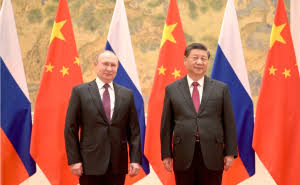
China and Russia present themselves as close strategic partners. They trade energy, hold joint military exercises, and support each other on major global issues. From the outside, this can look like a strong alliance.
But the relationship is more complicated. The two countries also have competing interests in energy, Central Asia, military technology, and regional influence. Their partnership is real, but it is built more on shared pressure from the West than on complete trust.
What Does It Mean to Be an Ally?
An ally is more than a friendly country or trading partner. True alliances include clear security commitments, military coordination, and a promise to provide support during a conflict.
China and Russia cooperate closely, but their relationship does not include a NATO-style mutual defence agreement. To judge whether they are real allies, we should ask:
- Would Russia fight for China over Taiwan?
- Would China enter a war between Russia and NATO?
- Do their armed forces share command structures and defence plans?
- Are they willing to accept major economic or military costs for each other?
For now, China and Russia are better described as strategic partners. They work together when their interests align, but neither country has promised to defend the other automatically.
From Communist Allies to Border Enemies
China and the Soviet Union began as close communist allies. In 1950, they signed a formal alliance treaty. Moscow also helped China develop its industry, armed forces, missile programme, and early nuclear research.
The relationship soon weakened. Mao Zedong and Soviet leaders disagreed over ideology, global leadership, and security policy. China also became increasingly uncomfortable with Soviet influence and control.
Tensions reached a peak in 1969, when Chinese and Soviet troops fought along their shared border. Both sides prepared for the possibility of a wider war, despite following similar political systems.
Relations improved after the Cold War. The two countries settled most border disputes and signed a friendship treaty in 2001. This history shows that shared ideology did not prevent rivalry before, and common interests may not guarantee permanent friendship today.
Why China and Russia Need Each Other Today
China and Russia are brought together mainly by shared strategic interests. Both want to reduce US influence, weaken Western sanctions, and build a more multipolar global system. Cooperation also gives them greater influence in groups such as BRICS and the Shanghai Cooperation Organization.
Russia provides China with oil, gas, coal, metals, food, and military experience. China gives Russia access to a large export market, manufactured goods, technology, and diplomatic support. This makes the partnership useful for both sides, even if China now has greater economic power.
Their relationship is therefore based less on friendship and more on mutual need. China gains secure resources and geopolitical support. Russia gains an economic and political lifeline.
Geography: A Secure Border or a Future Source of Tension?
China and Russia share one of the world’s longest land borders. Most territorial disputes were settled after the Cold War, and the border is now far more stable than it was during the Soviet period. This allows both countries to focus their military attention elsewhere.
However, geography may still create long-term tension. Russia’s Far East is rich in oil, gas, metals, timber, and other resources, but it has a small population compared with nearby Chinese regions. Moscow may worry about becoming economically dependent on Chinese trade, investment, and infrastructure.
This does not mean China is preparing to seize Russian territory. Economic influence is a more realistic concern than military expansion. Russia may keep political control of the region while China gains greater power over its resources, transport routes, and export markets.
Central Asia: Cooperation Today, Competition Tomorrow
Central Asia has long been part of Russia’s political and security sphere. Moscow still has strong military ties, cultural influence, and labor links across countries such as Kazakhstan, Kyrgyzstan, Tajikistan, Uzbekistan, and Turkmenistan.
China’s role is growing faster on the economic side. Through trade, energy projects, loans, and the Belt and Road Initiative, Beijing has become a major investor and commercial partner across the region.
For now, Russia and China avoid direct confrontation. Russia focuses more on security, while China leads in trade and infrastructure. But this balance may not last. If Chinese economic influence turns into greater political or military influence, Central Asia could become one of the main areas of rivalry between the two powers.
Economics: Partnership or Growing Russian Dependence?
China and Russia have built a strong economic partnership. Russia supplies oil, gas, coal, metals, timber, and agricultural products. China provides machinery, vehicles, electronics, industrial parts, and consumer goods.
However, the relationship is becoming increasingly unequal. Russia has fewer major markets available because of Western sanctions, while China can still buy resources from many different countries. This gives Beijing greater influence over prices, contracts, and future energy trades.
The trade structure also matters. Russia mainly exports raw materials, while China sells higher-value manufactured products. The partnership supports both economies, but Russia risks becoming too dependent on one buyer, one currency, and one source of technology.
Military Cooperation: Powerful but Not Fully Integrated
China and Russia have expanded their military cooperation through joint exercises, bomber patrols, naval drills, arms sales, and technology transfers. Russia has also supplied China with advanced aircraft and air defense systems.
However, their armed forces are not fully integrated. They do not share a permanent command structure, joint defense plans, or a clear promise to fight together in every conflict. Differences in military culture, strategy, and trust still limit deeper cooperation.
Their military partnership is strong enough to pressure the United States and its allies. But it remains far below the level seen inside formal alliances such as NATO.
Did Russia Help Create the Chinese Military Threat?
The Soviet Union played an important role in the early development of China’s military industry. During the 1950s, Moscow provided scientific training, research equipment, industrial support, missile knowledge, and assistance for China’s early nuclear program.
However, Soviet support had clear limits. Relations deteriorated, and Moscow withdrew its specialists by 1960. China continued the program independently and tested its first nuclear weapon in 1964. Soviet assistance helped build the foundation, but it did not provide China with its finished nuclear arsenal.
Russian Weapons Accelerated China’s Modernization
After the Soviet collapse, Russia became an important arms supplier to China. Beijing purchased Russian fighter aircraft, engines, missiles, submarines, and air-defense systems. These transfers helped China modernize its forces faster.
China also studied and adapted some Russian systems. The Chinese J-11 fighter, for example, was developed from the Russian Su-27. Russia had concerns about unauthorized copying because China was becoming both a customer and a competitor in the global arms market.
Did Russia Give China Hypersonic Technology?
There is no strong public evidence that Russia simply transferred its complete modern hypersonic weapons technology to China. China’s progress came from decades of domestic research, testing, industrial investment, and earlier access to foreign military knowledge.
Today, China has its own advanced missile and hypersonic inventory. Russian and Soviet technology may have influenced the starting point, but China is no longer only copying or importing systems. It has built a large defense industry capable of developing advanced weapons independently.
Is Russia Comfortable with China’s Military Rise?
China’s military growth helps Russia by placing more pressure on the United States and its Asian allies. But Moscow also has reasons to be uneasy.
China now needs fewer Russian weapons, competes with Russia in export markets, and is developing technologies that were once Russian advantages. Russia helped strengthen a useful strategic partner, but it may also have accelerated the rise of a future military competitor.
Could China Eventually Dominate Russia?
China already has the stronger economy, a much larger manufacturing base, and greater influence over global trade. Russia remains a major military and energy power, but its access to Chinese markets, technology, and industrial goods has become more important since Western sanctions expanded.
This creates an unequal relationship. China can choose from several energy suppliers, while Russia has fewer large buyers available. Beijing therefore has more influence over prices, payment methods, pipeline projects, and investment terms.
Russia is unlikely to accept open Chinese control. It still holds major advantages in nuclear weapons, natural resources, Arctic access, and military experience. However, if the current trend continues, Moscow may remain politically independent while becoming economically more dependent on Beijing.
Could the United States and Russia Become Allies Against China?
The idea is not only a conspiracy theory. Foreign policy analysts call it a “Reverse Nixon” or “Reverse Kissinger” strategy. In the 1970s, the United States improved relations with China to balance the Soviet Union. A modern version would bring Washington closer to Moscow to limit China’s rise.
Why It Could Happen
Russia may eventually become uncomfortable with China’s growing economic, military, and political power. Tensions could increase if Beijing gains too much influence in Central Asia, the Arctic, or Russia’s energy sector. A future Russian government may also seek better access to Western markets and technology.
The United States could offer sanctions relief, trade opportunities, arms-control agreements, or security talks. In return, Washington might ask Moscow to reduce military and technological cooperation with Beijing.
Why It Is Unlikely Today
Russia currently sees the United States and NATO as more immediate threats than China. Beijing provides an important market for Russian energy, access to manufactured goods, diplomatic support, and protection from international isolation.
Moscow would also struggle to trust a long-term American commitment. US policy can change after elections, while China offers Russia a stable neighbor and a shared interest in reducing Western influence. Most analysts therefore see a complete US-Russia alliance against China as unlikely under current conditions.
A More Realistic Scenario
Russia does not need to fully change sides. It could try to balance between China and the West by rebuilding selected economic ties with Europe and the United States while continuing to trade with Beijing.
The more realistic future is not a formal US-Russia alliance. It is a Russia that cooperates with China but refuses to become fully dependent on it.
