

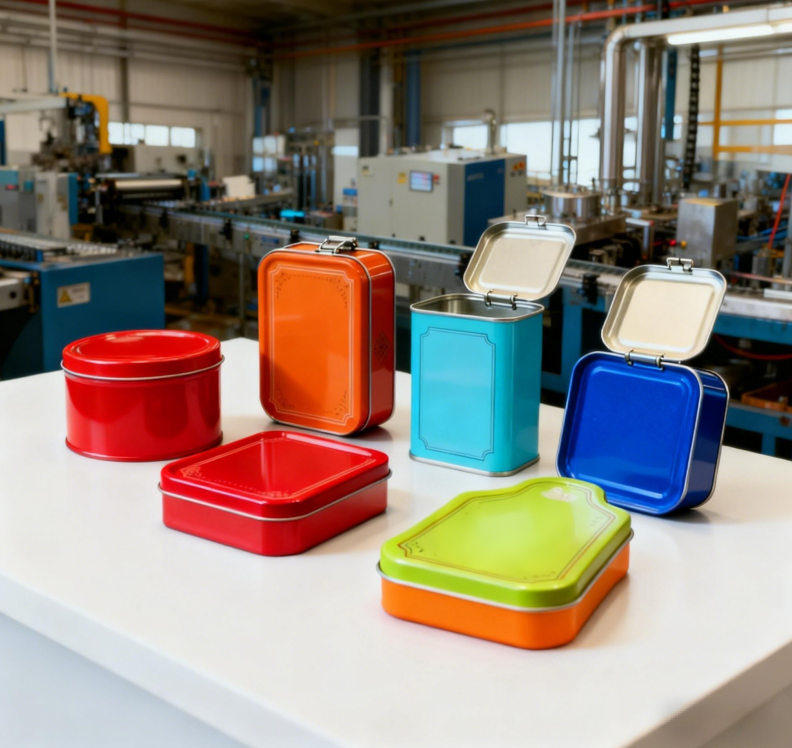
Moisture is a silent killer that can compromise product quality. As a product manager at TSING with extensive experience in tinplate packaging, I frequently help brands evaluate lid-sealing structures; these structures determine how effectively a custom tins protects against moisture and oxygen while preventing aroma loss. Clients often ask: which sealing method offers superior moisture resistance and freshness preservation without sacrificing ease of use or significantly driving up costs? The answer depends on the product’s sensitivity, its intended shelf life, and consumer usage habits.
Understanding the Challenges of Moisture Resistance and Freshness Preservation in Custom Tins
To understand the challenges of moisture resistance and freshness preservation, one must first grasp how water vapor and oxygen penetrate packaging. Even the tiniest gap around the lid allows moisture to gradually seep in, causing crispy products to soften, clump, or lose flavor. Simultaneously, aromatic compounds can escape, diminishing the sensory appeal the brand has carefully cultivated. Custom tin boxes possess an inherent advantage because metal is an excellent barrier material; however, the interface where the lid meets the body remains a critical control point.
At TSING, we evaluate sealing performance under controlled temperature and humidity conditions to quantify how different structures perform over time. Test results consistently show that the design of the lid-to-body interface has a more significant impact on shelf life than any other single packaging variable. Brands that prioritize sealing integrity in their design process ensure their tin packaging provides more reliable protection.
Slip-Lid Structures and Their Moisture-Resistant Properties
Slip-lid structures are highly popular in the custom tin box market due to their simple construction and clean aesthetic. These lids fit over the body via a friction fit, relying primarily on precise dimensional control, sometimes supplemented by a thin layer of sealant or a gasket. When manufacturing tolerances are tightly controlled, a well-designed slip lid offers effective everyday protection for products with moderate moisture sensitivity. However, compared to systems with more secure locking mechanisms, slip lids generally offer weaker sealing performance in environments with sustained high humidity.
Frequent opening and closing can cause the lid fit to loosen, and even minor dents can compromise the seal’s effectiveness. TSING enhances the performance of custom sliding-lid tin cans through meticulous hemmed-edge designs, uniform metal thickness, and optional food-grade sealants; these improvements boost moisture-barrier capabilities without compromising the user experience.
Hinged-Lid Sealing Systems for Frequently Opened Custom Tins
Hinged-lid sealing systems balance convenience with superior moisture resistance, making them ideal for custom tins that consumers open frequently. The hinge design keeps the lid attached to the body, reducing the risk of loss or misplacement. At the same time, reliable latches or friction-fit mechanisms ensure constant pressure on the sealing surfaces. Many hinge systems utilize continuous gaskets or molded seals that compress to form a tight seal when the lid is closed.
When designing these custom tins, TSING prioritizes seal compression, hinge durability, and the long-term performance of the locking mechanism. The result is a sealing structure that effectively protects contents even after dozens of opening and closing cycles. This design is particularly well-suited for products intended for multiple servings rather than single-use consumption, such as cookies, candies, or loose-leaf tea.
“Push-and-Twist” and Multi-Point Friction Lids for Custom Tins
“Push-and-Twist” lids and multi-point friction lids create a more secure engagement between the lid and the body of the custom tin. These structures require specific user actions to open, thereby increasing contact pressure at the sealing interface and enhancing resistance to moisture ingress. Some designs incorporate multiple friction points or micro-mechanical interlocks to maintain seal integrity even when the tin is subjected to minor impacts.
TSING utilizes precision tooling to develop these lid structures, ensuring that opening force is moderate and aligns with consumer habits while maintaining excellent sealing performance. Optional sealant materials can further enhance moisture-barrier effectiveness. Custom tin cans featuring “push-and-twist” systems often achieve shelf-life performance comparable to complex industrial-grade sealed packaging, all while retaining the premium aesthetic appeal of metal packaging. Delivering Superior Protection with
Enhanced Sealing Technology (Gaskets and Sealants)
By utilizing enhanced sealing technologies—such as gaskets or sealants—standard custom tin cans can achieve exceptional moisture resistance and freshness preservation. A continuous elastic gasket or a precisely applied sealant creates a compressible barrier that fills the minute gaps between the lid and the body. When the lid is closed, this material effectively blocks out moisture and oxygen.
TSING selects food-grade gasket materials and sealants that remain elastic across the intended temperature range and withstand repeated opening. Standardized application and installation processes ensure precise, consistent placement and dosage of the sealing material, guaranteeing reliable performance for every custom tin box. This enhanced sealing system works especially well for moisture-sensitive products, items that require a long shelf life, and products shipped to high-humidity regions.
Creating Custom Can Tins with Reliable Moisture Resistance and Freshness Preservation
The sealing structure of the lid is a critical factor in determining a custom metal tin’s moisture resistance and freshness preservation capabilities. While the metal itself offers excellent barrier properties, the final sealing method dictates the actual level of protection. Whether utilizing slip-on lids, hinged lids, twist-to-close mechanisms, or designs incorporating sealing gaskets, each sealing solution offers unique advantages regarding protection levels and ease of use. By precisely matching the sealing structure to product requirements and conducting rigorous testing, we create custom metal tins that maintain product quality throughout their intended shelf life.
Leveraging our expertise in design, materials science, and testing validation, TSING assists brands in
