

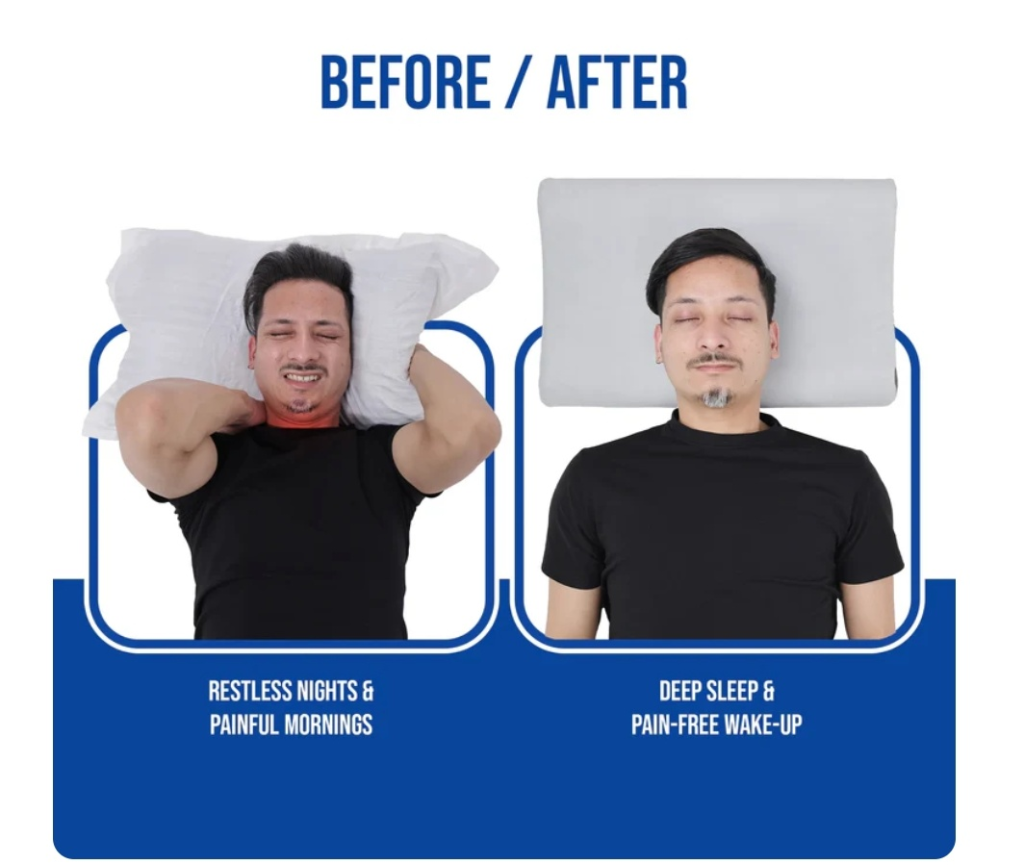
Cervical spondylosis is one of the most common causes of chronic neck pain, stiffness, and sleep discomfort, especially among office workers, elderly individuals, and people who spend long hours using computers or mobile devices. Many patients ask doctors a practical question:
Can changing your pillow actually improve cervical spondylosis symptoms?
The short answer from orthopedic and spine specialists is yes, when used correctly, a cervical pillow can significantly support recovery and symptom control. However, understanding why it works requires knowing the science behind cervical spine mechanics and sleep posture.
Understanding Cervical Spondylosis
Cervical spondylosis refers to age-related degeneration of the cervical spine, including all these:
- Disc dehydration and thinning
- Bone spur formation
- Ligament stiffness
- Facet joint wear
- Reduced spinal flexibility
According to guidance shared by organizations such as the American Academy of Orthopaedic Surgeons, nearly 85% of people above age 60 show some degree of cervical degeneration.
Common symptoms include the following:
- Persistent neck pain
- Morning stiffness
- Shoulder or upper back pain
- Headaches from the neck base
- Arm numbness or tingling
- Poor sleep quality
A major but often overlooked contributor is improper neck positioning during sleep.
Why Sleep Position Matters in Cervical Spondylosis?
Your neck maintains a natural inward curve called the cervical lordosis. During sleep, this curve should remain neutral.
Problem with Regular Pillows
Most standard pillows features the following:
- Collapse under head weight
- Push the neck forward
- Allow sideways bending
- Fail to support the cervical curve
This causes the following:
- Overnight muscle strain
- Ligament stress
- Joint compression
- Nerve irritation
Patients often wake up with more pain than before sleeping, even after adequate rest duration.
What Is a Cervical Pillow?
A cervical pillow (also called a cervical neck pillow or cervical pain relief pillow) is designed to provide all these:
- Support the natural neck curvature
- Maintain spinal alignment
- Reduce pressure on cervical joints
- Relax neck muscles overnight
Typical features include:
- Contoured shape
- Neck support ridge
- Head depression zone
- Firm but adaptive material
Instead of lifting only the head, it supports both the head and neck together.
How Cervical Pillows Reduce Pain?
Doctors explain improvement through three main biomechanical effects.
1. Spinal Alignment Correction
A cervical pillow keeps:
- Ear aligned with shoulder
- Head centered over spine
- Neck curve maintained
Proper alignment reduces abnormal loading on degenerative discs.
Result: Less joint irritation and morning stiffness.
2. Muscle Relaxation During Sleep
When neck muscles remain unsupported, they stay partially active all night to stabilize the head.
A cervical pillow benefits include the following:
- Reduces muscle guarding
- Prevents overnight spasms
- Allows deep muscular relaxation
Result: Reduced pain as well as improved mobility on waking.
3. Reduced Nerve Compression
Degenerated cervical structures can narrow nerve pathways.
Correct positioning helps:
- Open neural spaces
- Reduce pressure on cervical nerves
- Improve blood circulation
This may decrease the following symptoms:
- Arm numbness
- Tingling
- Radiating shoulder pain
Doctor Insights: Who Benefits Most?
Orthopedic specialists commonly recommend cervical pillows for patients with these problems:
- Cervical spondylosis
- Chronic neck stiffness
- Desk-related neck strain
- Postural neck pain
- Mild cervical disc bulge
- Sleep-related neck pain
However, improvement depends on consistent use and correct pillow height.
Do Doctors Recommend Cervical Pillows for Daily Use?
Orthopedic doctors and spine specialists increasingly recommend cervical pillows as part of long-term neck care. Especially for individuals who have been managing cervical Sleep support provides sustained overnight support for men and women, functioning continuously for 6–8 hours unlike short-term relief solutions. Maintaining proper cervical alignment during this period allows spinal structures to recover from daytime mechanical stress.
Doctors generally advise daily cervical pillow use if you have been dealing with these:
- chronic neck stiffness
- early cervical degeneration
- sedentary or desk-based lifestyles
- frequent mobile or laptop users
Orthopedic Pillow vs Regular Pillow
Feature
Cervical Pillow
Regular Pillow
Neck curve support
Designed support
Usually absent
Spinal alignment
Maintained
Often distorted
Pressure distribution
Even
Uneven
Muscle relaxation
Improved
Limited
Pain prevention
High
Low
Suitable for spondylosis
Yes
Often worsens symptoms
Choosing the Best Cervical Pillow
Doctors recommend focusing on fit, not brand popularity.
Key Selection Factors
1. Sleeping Position
Sleeping Style
Recommended Pillow
Back sleepers
Medium contour
Side sleepers
Higher neck support
Combination sleepers
Adaptive contour pillow
Stomach sleepers
Usually not advised
2. Material Matters
Common supportive materials include these:
- Memory foam
- High-density foam
- Latex support foam
These materials helps maintain shape throughout the night.
How Long Does It Take to See Improvement?
Doctors typically observe the following:
Time Period
Expected Change
First week
Adjustment discomfort possible
2–3 weeks
Reduced morning stiffness
4–6 weeks
Noticeable pain reduction
2–3 months
Better sleep quality and mobility History
Consistency is essential. Switching pillows frequently delays adaptation.
Correct Way to Use a Cervical Pillow
Many patients use cervical pillows incorrectly.
Proper Method
- Neck rests on raised contour
- Head sits in center depression
- Shoulders remain outside pillow
- Spine stays straight while lying sideways
The pillow should support the neck not push the head forward.
Common Mistakes Doctors See
1. Using Multiple Pillows
Stacking pillows destroys spinal alignment.
2. Sleeping Too High
Excess elevation increases disc pressure.
3. Immediate Expectations
Relief develops gradually as muscles adapt.
4. Poor Daytime Posture
A pillow cannot offset prolonged forward-head posture.
Experts say pillows work best when you also improve your posture.
Recommended Habits
- Keep screen at eye level
- Take hourly stretch breaks
- Perform neck mobility exercises
- Avoid prolonged phone bending
- Maintain blood circulation through activity
Can a Cervical Pillow Cure Cervical Spondylosis?
Key Points:
A cervical pillow does not cure degeneration.
Instead, it helps by doing the following:
- Controlling symptoms
- Preventing progression stress
- Improving sleep recovery
- Reducing flare-ups
Think of it as supportive therapy, similar to physiotherapy or posture training.
When a Pillow Alone Is Not Enough
Consult a doctor for these:
- Persistent arm weakness
- Severe numbness
- Balance problems
- Progressive pain
- Loss of hand coordination
These may indicate nerve compression requiring medical evaluation.
Doctor’s Final Advice
From an orthopedic perspective:
- Sleep posture influences neck health for 6–8 hours daily
- Cervical alignment during sleep directly affects pain levels
- Proper neck support reduces mechanical stress on aging spinal structures
A well-chosen cervical pillow acts as a night-time rehabilitation tool, allowing muscles, joints, and nerves to recover while you sleep.
Key Takeaway
Yes, a cervical pillow can significantly help cervical spondylosis, in case of these:
- The height matches your body structure
- Sleeping posture is correct
- Usage is consistent
- Daytime ergonomics are improved
Small biomechanical corrections repeated every night can produce meaningful long-term relief in cervical spine health.
