

Vaping has evolved rapidly over the past decade, transforming from a niche hobby to a mainstream activity practiced by millions worldwide. With this growth comes heightened curiosity—and sometimes confusion—about the nicotine levels found in different types of vaping products. One of the most common questions asked by new users, parents, and even long-time vapers is: What is the maximum nicotine in a vape?
The answer varies widely depending on the country, the type of vape product, the formulation of the e-liquid, and the device’s performance. This article breaks down the key concepts so you can understand what “maximum nicotine” really means, how it affects the body, and where popular products (like the RandM Tornado 9000) fit into the picture.
Understanding Nicotine in Vape Products
Unlike traditional cigarettes, vape products come in a wide variety of nicotine strengths. These strengths are typically listed in milligrams per milliliter (mg/mL) or percentage (%).
- 1% nicotine = 10 mg/mL
- 2% nicotine = 20 mg/mL
- 5% nicotine = 50 mg/mL
This concentration tells you how much nicotine is present in each milliliter of e-liquid, but it does not directly equal how much nicotine you absorb—that depends on device power, puff duration, and user behavior.
Before exploring maximum levels, it’s helpful to understand the two main types of nicotine used in vapes.
Freebase Nicotine vs. Nicotine Salts
Freebase Nicotine
This is the traditional form of nicotine used in early vape juice. It delivers a sharper throat hit and usually comes in lower concentrations, typically between 3 mg/mL and 18 mg/mL. Higher levels can feel harsh, making them less appealing for many users.
Nicotine Salts
Nicotine salt (often called “nic salt”) is made by combining nicotine with an acid to create a smoother vaping experience. This smoother feel allows manufacturers to use higher nicotine concentrations—often 20 mg/mL to 60 mg/mL—without the harshness associated with freebase.
Because they deliver nicotine more quickly and comfortably, nic salts are commonly found in disposable vapes and pod systems.
Legal Maximum Nicotine Levels Around the World
One of the biggest factors influencing maximum nicotine levels is government regulation. Some countries restrict how strong e-liquids can be, while others have no specific limit.
Europe and the United Kingdom: 20 mg/mL Maximum
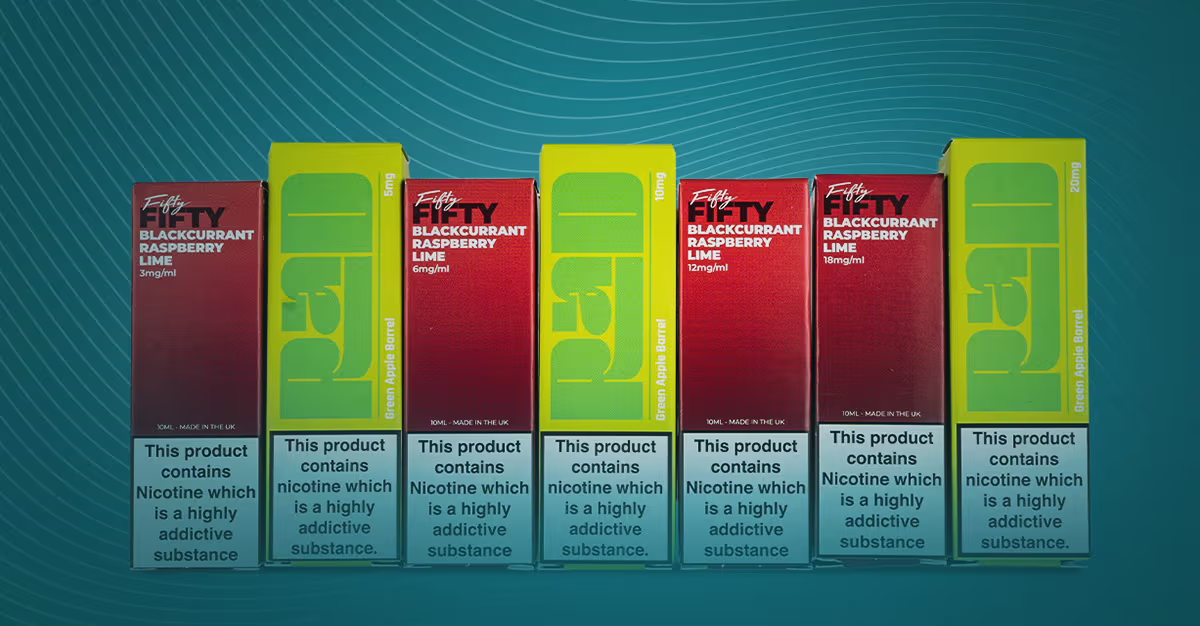
Under regulations such as the Tobacco Products Directive (TPD), all vape juice sold legally in the EU and UK must be 20 mg/mL (2%) or lower. This rule applies to bottled e-liquid and prefilled pods alike.
Because of this, European versions of popular disposable vapes—including models similar to the RandM Tornado series—are capped at 20 mg/mL, even when higher-nicotine versions exist in other markets.
Canada: Also 20 mg/mL Maximum
Canada has similar regulations, also setting the maximum nicotine concentration at 20 mg/mL. This was done to reduce the appeal of high-nicotine products to teenagers and young adults.
United States and Many Other Regions: No National Limit
In the United States, there is no nationwide cap on nicotine concentration in vape products. As a result, it is common to find vape juices and disposables in strengths of:
- 30 mg/mL
- 40 mg/mL
- 50 mg/mL
- 55–60 mg/mL (typical for many high-strength disposables)
Because manufacturers catering to the U.S. market are unrestricted by law, many high-nicotine devices—such as the RandM Tornado 9000—offer strengths around 5% (50 mg/mL) to satisfy users who want a strong nicotine hit similar to traditional cigarettes.
So, What Is the Maximum Nicotine in a Vape?
Strictly speaking, the highest nicotine strengths that appear in commercial products tend to be in the range of:
50–60 mg/mL (5–6%)
This is typically the upper limit for nicotine salt e-liquids, especially in disposable vapes. Concentrations higher than this are rare and generally considered too strong for regular consumer use.
In theory, it is possible to create e-liquids with even higher nicotine, but they would be extremely harsh, potentially unsafe, and not widely sold.
Why Users Choose High Nicotine Levels
There are several reasons why vape products with high nicotine concentrations (like the RandM Tornado 9000 at 5%) remain popular:
1. Faster Nicotine Delivery
Nicotine salts absorb into the bloodstream more quickly, providing a cigarette-like experience.
2. Suitable for Small Devices
High-strength liquids work well in low-power devices and disposables, which cannot produce huge vapor clouds.
3. Effective for Smoking Replacement
Many smokers transitioning to vaping prefer strong nicotine at first to reduce cravings.
How Nicotine Strength Impacts the Body
Nicotine is a stimulant that affects the nervous system. The higher the concentration, the faster it can lead to:
- dependence
- increased heart rate
- lightheadedness
- nausea (with too much use)
Because nic salts deliver nicotine more efficiently than freebase, a 50 mg/mL disposable vape may feel significantly stronger than older vape juices with the same concentration.
Understanding this helps users make informed decisions—and avoid symptom overload from using too strong a product.
Where the RandM Tornado 9000 Fits In
The RandM Tornado 9000 is a widely recognized disposable vape known for its large puff count and colorful LED-enhanced design. In most global markets that permit it, the device typically contains:
- 5% nicotine (50 mg/mL)
- Nicotine salt formulation
- Smooth, strong throat hit suitable for ex-smokers
Devices like the RandM Tornado 9000 illustrate the upper end of what modern disposable vapes offer. While legal in regions without a nicotine limit, many countries with strict regulations require this model to be reformulated to lower strengths.
Is Higher Nicotine Always Better?
Not necessarily. Choosing the right nicotine strength depends on your goals, tolerance, and experience level.
High Nicotine (20–50 mg/mL)
Best for heavy smokers transitioning to vaping or those needing rapid craving relief.
Moderate Nicotine (6–12 mg/mL)
Good for regular vapers who prefer a noticeable but balanced hit.
Low Nicotine (0–6 mg/mL)
Ideal for light users, hobbyist vapers, or those gradually reducing dependence.
Conclusion
The maximum nicotine level found in vape products varies widely depending on local laws and product design. While regions like the EU, UK, and Canada set strict limits of 20 mg/mL, other markets—including the U.S.—carry high-strength nicotine salt products that reach 50–60 mg/mL.
Disposable vapes such as the RandM Tornado 9000 commonly feature 5% (50 mg/mL) nicotine, placing them at the top end of what is considered standard for consumer vaping.
