

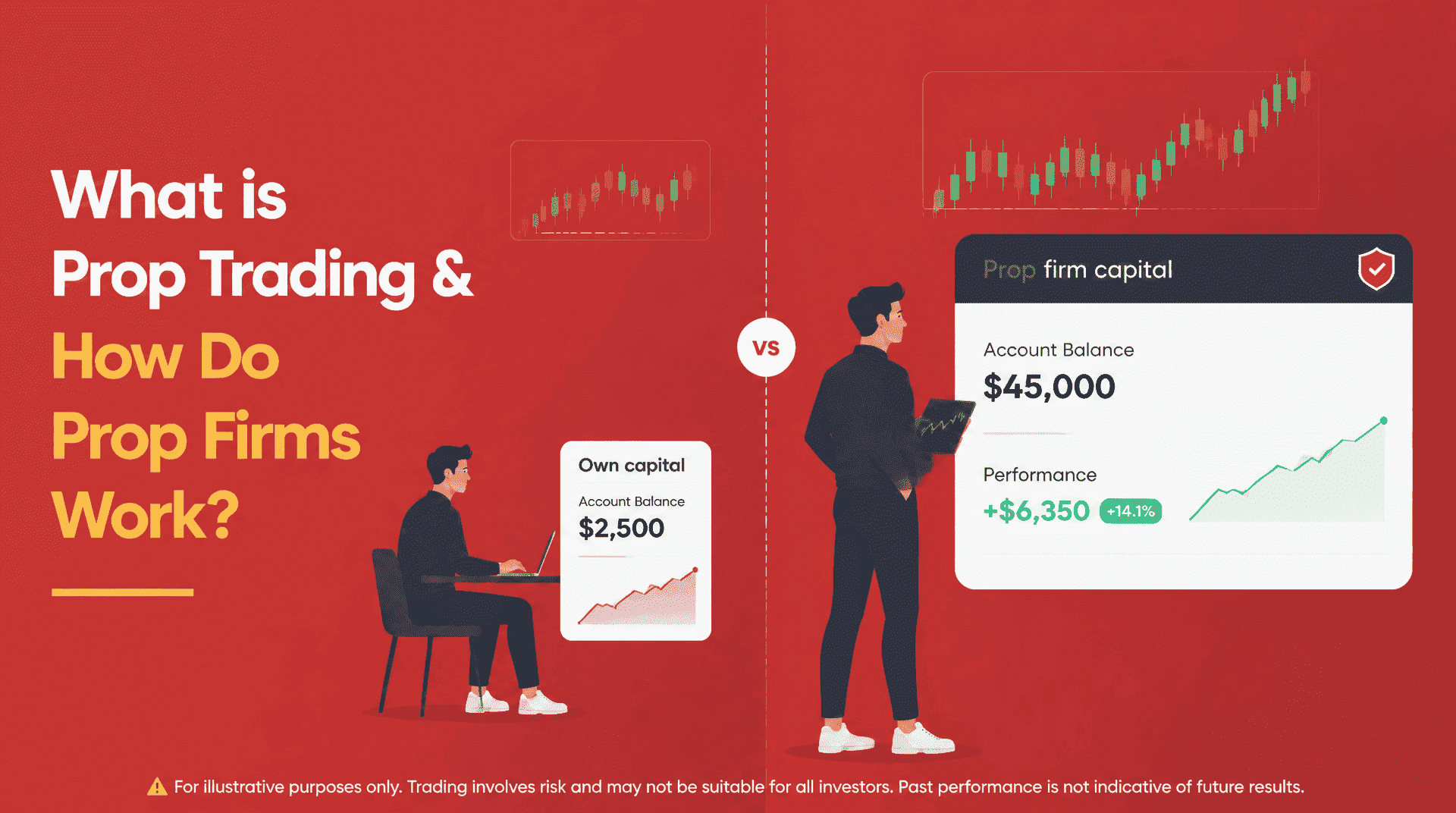
A prop trading challenge involves more than selecting an account size or paying an entry fee. Traders need to understand profit targets, drawdown limits, trading conditions, account rules, and reward structures before beginning an evaluation. A funding prop firm can provide a structured environment where traders demonstrate their ability to manage simulated capital while meeting defined performance requirements. Each condition can influence how a trading strategy is planned and executed.
The model provides traders with an alternative way to demonstrate market skills without directly committing personal trading capital to market positions. However, challenge structures vary considerably. Some programs use multiple evaluation stages, while others provide single-stage or direct account formats. Understanding these differences helps traders identify an arrangement that suits their strategy, experience, preferred instruments, and approach to risk.
Understanding the Challenge Structure
A proprietary trading challenge generally assesses performance against predefined objectives and risk parameters. Profitability may be one requirement, but traders can also need to remain within specified drawdown limits and follow particular trading conditions. This means success depends on maintaining discipline throughout the evaluation rather than relying on a few highly profitable positions.
The relationship between profit targets and drawdown limits deserves particular attention. An aggressive approach may reach a target quickly but can also create greater exposure to losses. A more measured strategy may provide greater room for market fluctuations while requiring patience. Traders should therefore understand the account rules before deciding how much risk to take on individual positions.
Important areas to review include:
- Initial simulated account size
- Profit target
- Maximum drawdown
- Daily loss restrictions
- Trading conditions
- Evaluation stages
- Reward or payout requirements
Building a Strategy Around Risk Parameters
A strategy used during an evaluation may need to account for restrictions that would not apply to a personal trading account. Position size, holding period, trade frequency, and preferred market sessions should all be considered in relation to the challenge rules. Traders benefit from establishing these parameters before opening positions rather than adjusting them emotionally after a loss.
Position Sizing
Position sizing determines how much exposure is assigned to each trade. Smaller positions can leave greater room for consecutive losses, while larger positions can accelerate both gains and drawdowns. A consistent sizing method can therefore help traders maintain control throughout the evaluation.
Loss Management
Loss management helps prevent individual trades from consuming too much of the permitted risk allowance. Traders can establish predetermined exit levels and maximum acceptable losses before entering positions. This creates a clearer framework for responding when a trade moves against the original expectation.
Trading Frequency
Trading frequency should reflect the strategy rather than pressure to reach a target quickly. Taking marginal setups simply to increase activity can introduce unnecessary risk. A selective approach based on predefined conditions may provide greater consistency across the evaluation period.
Selecting an Appropriate Account Format
Account selection should be based on the trader’s strategy rather than the largest simulated balance available. A larger account may appear attractive, but its associated objectives and drawdown conditions still determine how positions can be managed. Traders should compare the relationship between account size, target, permitted loss, and trading requirements.
Evaluation formats can also differ significantly. A multi-stage challenge may require traders to meet separate objectives before progressing, while a single-stage structure can provide a more direct assessment. Other formats may cater to traders with specific approaches, such as shorter-term activity. Reviewing these differences beforehand can prevent an unsuitable account structure from affecting the trading process.
When comparing available formats, traders can examine:
- Number of evaluation stages
- Simulated account size
- Entry cost
- Profit objective
- Drawdown conditions
- Trading restrictions
- Reward structure
Reviewing Rewards and Payout Conditions
Reward arrangements should be examined alongside challenge requirements. Traders need to understand how eligible performance is calculated, when rewards become available, and whether specific conditions apply before a withdrawal can be requested. Clear terms make it easier to evaluate the overall structure of an account.
A reward percentage alone does not determine whether a challenge is suitable. Traders should consider the complete arrangement, including entry costs, performance objectives, drawdown rules, and any conditions connected with receiving rewards. Comparing these elements together provides a more realistic view of the program.
Understanding the UK Trading Environment
UK traders should distinguish between simulated proprietary trading programs and regulated investment services. The FCA states that firms carrying out certain principal trading activities involving financial instruments can require authorization, depending on the nature of their business and activities. (fca.org.uk)
The regulatory treatment depends on the specific business model and services being provided. Traders should therefore determine whether an account involves simulated activity, live market execution, or another arrangement. Understanding the operating entity, available instruments, trading conditions, and applicable terms can help participants assess the structure more accurately.
Useful checks include:
- Whether trading is simulated or live
- Available markets and instruments
- Evaluation requirements
- Applicable risk limits
- Reward calculation
- Account conditions
- Operating entity and terms
Final Thoughts
What makes a prop trading challenge useful for a trader seeking a structured route to performance development? The strongest framework combines clear objectives, understandable risk parameters, practical account choices, transparent progression rules, and defined reward conditions. For traders exploring prop trading UK, Bitfunded provides a fully simulated environment focused on crypto prop trading, with more than 100 crypto pairs alongside 20+ TradFi markets shown on its website.
Bitfunded offers challenge formats including two-step, one-step, instant, and day-trader options, with simulated account sizes reaching $100,000 USDT and a stated 80/20 reward split for eligible simulated profits. Its platform also allows trading during weekends and news events, while its Academy provides an additional learning environment for traders developing their market approach. For participants comparing challenge providers, understanding these specific mechanics can make it easier to select a format that aligns with their strategy and risk-management discipline.
