

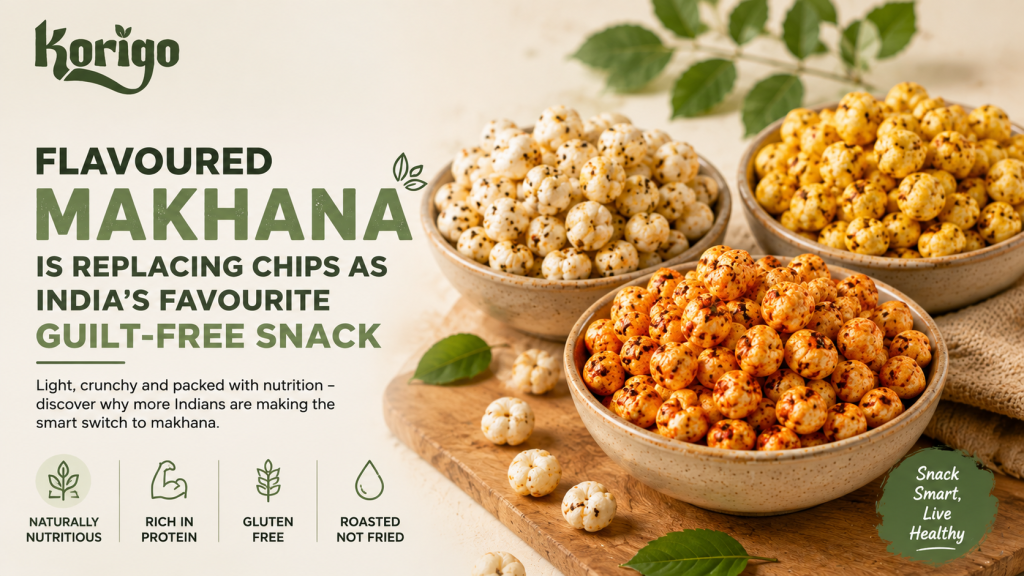
Walk into any Indian household today and you’ll notice something has – sorta changed in the snack drawer. That greasy packet of chips that used to disappear in one single sitting now just sits there, half-finished, kind of pushed aside for something crunchier but also lighter flavoured makhana. What used to be this niche health food a few years back has now turned into one of the fastest-growing snack categories in the country, and honestly it’s not that hard to see why. Roasted, seasoned, and loaded with the kind of nutrition that chips can only pretend to have, flavoured makhana is doing something that no fitness influencer really managed on their own: making guilt-free snacking taste genuinely good.
Why Chips Are Losing Their Grip
Chips had a pretty decent run. Cheap , salty, and somehow always available at every kirana shop and railway platform, they were the default answer when someone says, “give me something to munch.” But yeah, the cracks are kinda showing for a while now. People actually look at ingredient labels these days. They spot the trans fats, the refined oils used for frying, and those sodium numbers that creep past what a normal single serving should really carry. A 30 gram packet can easily bring in over 150 calories with almost nothing to show for it on the nutrition side – no protein, no fibre, just that crunch, and then regret a little later, like 20 minutes later.
That regret is kind of exactly what’s nudging folks toward alternatives. Not that anyone suddenly woke up and decided they hate chips, but because there’s now a genuinely tasty option that doesn’t come with the same deal, the same trade-off really.
What Makes Makhana Different
For anyone who hasn’t really grown up with it, makhana, also called fox nuts or lotus seeds, comes from the seeds of the prickly water lily, grown mostly in the wetlands of Bihar. It’s been kinda part of Indian diets for centuries, eaten during fasting days and festivals, plus as a light evening snack, roasted with a bit of ghee and salt. What’s changed though isn’t the ingredient. It’s more the way it’s being packed and sold.
A single serving of roasted makhana has about 4 grams of protein, minimal fat, and a solid dose of fibre and magnesium. It’s naturally gluten-free and low in calories, so it lands in a totally different category compared with a fried potato snack. Then there’s the fact that it’s air-roasted rather than deep-fried, and you can see why nutritionists have been quietly nudging people toward it for years, way before it turned into an Instagram trend.
The Flavour Explosion
The real shift happened when brands stopped selling plain roasted makhana and started experimenting with flavour. Peri peri, cheese and herb, tandoori masala, pudina, and classic Indian spice blends – suddenly makhana wasn’t the boring, virtuous snack you ate because you had to. It could be exciting. It could compete directly with the chip aisle on taste while still winning on nutrition.
That’s really the story of flavoured makhana in one line: it closed the gap between “healthy” and “actually enjoyable to eat.” Once that gap closed, there was no reason left for most people to reach for a chip packet out of habit. The crunch is there. The flavour is there. The only thing missing is the oil slick on your fingers.
Chocolate Makhana – Dessert Without the Damage
Then came a flavour nobody expected to work quite as well as it does : chocolate. Chocolate makhana takes the same roasted lotus seed and coats it lightly in dark, or milk chocolate , and somehow it lands right in the sweet spot between a dessert and a snack. It satisfies a sugar craving without the sugar crash that comes from a full chocolate bar , and it gives parents something to hand their kids that isn’t pure sugar and palm oil.
I’ve noticed this particular variant does something interesting to buying behaviour – people who’d never pick up a “health snack” section on their own end up buying chocolate makhana because it reads as a treat first and a healthy choice second. That’s a smart bit of product positioning, honestly. It doesn’t ask the customer to compromise on indulgence. It just quietly removes the guilt from it.
Why This Shift Matters
India’s snacking habits are changing faster than most category reports capture. Urban consumers, especially those in the 20-40 age bracket, are actively swapping fried snacks for roasted, baked, or air-popped alternatives. Gyms, diet influencers, and a general post-pandemic health awareness have all played a part. But the bigger factor is simpler: flavoured makhana tastes good enough now that people aren’t “settling” for it. They’re choosing it.
This matters for the snack industry as a whole. Legacy chip brands have started launching their own baked and roasted lines in response. That’s usually a sign a category shift is real and not a passing trend – when the incumbents start copying the challengers.
It also opened the door for newer, focused players rather than just the big packaged-food giants bolting a makhana line onto an existing chip factory. Korigo Snacks is one of the newer names in this space, and being new isn’t really a disadvantage here – a brand that starts out built around roasted makhana, without a legacy chip business to protect, has less reason to cut corners on oil or ingredients just to match an old price point.
Who Is Actually Buying This
It’s not just gym-goers and dieticians’ clients. Working professionals keep a pack at their desk for the 4 PM slump instead of walking to the vending machine. Parents pack it into school tiffins because it survives a few hours without going soggy the way chips do once they’re squashed at the bottom of a bag. Older family members, especially those managing diabetes or cholesterol, have taken to it because it doesn’t spike blood sugar the way fried, starchy snacks do. And college students – who you’d expect to be the last holdouts for a cheap chip packet – are increasingly picking it up simply because flavours like peri peri and cheese taste close enough to what they already like, minus the sluggish feeling that follows a fried snack.
That spread across age groups and lifestyles is unusual for a “health food.” Most healthy snacks stay confined to people who are already disciplined about what they eat. Flavoured makhana has crossed over into everyday, casual snacking, which is probably the clearest sign that it’s not a fad.
How to Choose a Good Flavoured Makhana
Not all packets on the shelf are created equal, and it’s worth knowing what to look for.
- Check the ingredient list first. A short list with recognisable names – makhana, spices, a small amount of oil – is a good sign. If you see a long string of preservatives or “flavouring agents” you can’t pronounce, put it back.
- Look at how it’s cooked. Roasted or air-popped makhana should feel light, almost airy, when you bite into it. If it feels heavy or greasy, it’s probably been fried, which defeats the purpose.
- Watch the sodium. Some flavoured versions go overboard with salt to compensate for a weaker spice blend. A well-made one balances flavour without leaning on salt alone.
- And for chocolate makhana specifically, check the sugar content per serving. Good ones use it as an accent, not a flood.
Conclusion:
Chips aren’t disappearing from Indian shelves anytime soon – old habits don’t die that fast. But the balance is shifting, and flavoured makhana is a big reason why. It gives people the crunch and flavour they actually want from a snack, without the nutritional trade-off they’ve slowly become unwilling to make. Whether it’s a spicy tandoori pack for movie night or chocolate makhana for that 5pm sugar craving, this once-humble fasting food has quietly become one of the smartest snack choices in the country. And judging by how many new brands are entering the space, we’re probably still early in this shift, not late to it.
