

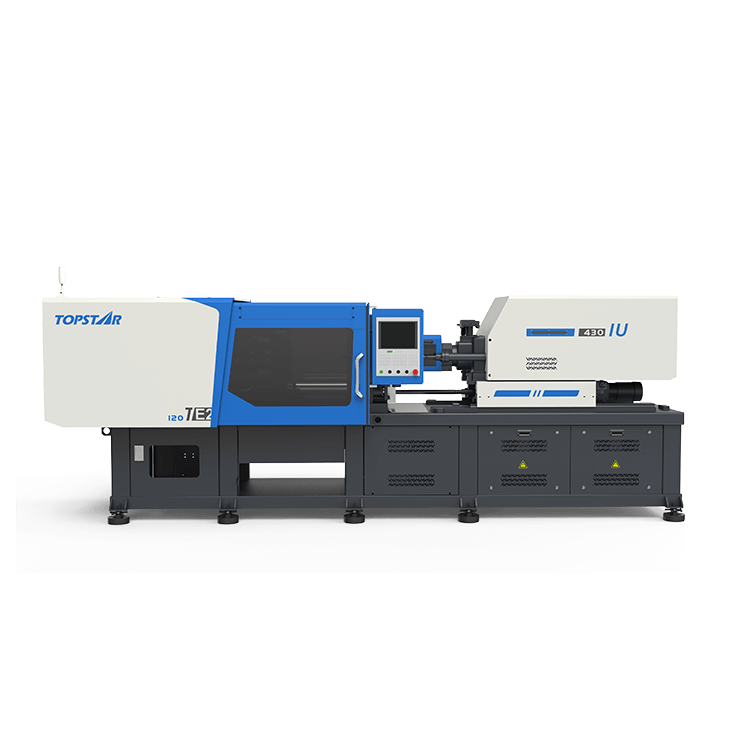
In the 3C and electronic components industries, batch consistency often determines whether a manufacturer secures long-term orders or is forced to contend with high return costs and the risk of production line downtime. As a Product Manager for Topstar’s advanced moulding equipment, I have seen how the right moulding machine can transform inconsistent output into a reliable, repeatable production process. When every connector, housing or precision component must maintain a high degree of consistency in terms of dimensions, appearance and performance, stability at the equipment level becomes a decisive advantage. This article explores how modern moulding machines enhance batch consistency in the large-scale production of 3C products and electronic components. Drawing on Topstar’s process data, on-site measurements and real-world customer case studies, we will demonstrate the specific mechanisms for reducing production fluctuations and improving first-pass yield.
Precision Injection Control on Moulding Machine: Ensuring Filling Consistency
Precision injection control is the cornerstone of achieving batch consistency in injection moulding machines. Servo-driven systems ensure highly precise speed and pressure curves during every injection cycle, thereby eliminating the fluctuations commonly found in traditional hydraulic equipment. For thin-walled connectors and structurally complex electronic enclosures, even minor deviations in filling speed can result in noticeable flow marks or dimensional deviations.
This injection moulding machine offers highly repeatable multi-stage speed control, ensuring that weld lines and flow fronts occur at the same position in every production cycle. A real-time closed-loop feedback system corrects minor disturbances before they affect product quality. Data from Topstar’s customers in the electronics industry shows that, following an upgrade to a high-precision platform, product weight fluctuations per moulding cycle are typically reduced by 40% to 60%.
Thermal Stability and Mould Temperature Control Integrated with the Moulding Machine
Thermal stability of the melt and the mould surface maintains constant material viscosity and ensures uniform holding pressure during the moulding process. Temperature fluctuations alter the material’s shrinkage characteristics and surface appearance, resulting in systematic variations within the same batch of products. A properly configured mould temperature controller, working in conjunction with the injection moulding machine, can strictly control the barrel and mould temperatures within the set range. Topstar combines injection moulding machines with a highly responsive temperature control system, ensuring that process conditions remain stable during long periods of continuous production and shift changes. For high-gloss or optically transparent electronic components, stable mould temperature is particularly critical, as even minute temperature fluctuations can lead to defects visible to the naked eye. This consistent thermal management solution eliminates one of the main factors causing variations between batches.
Closed-Loop Monitoring and Adaptive Correction
Closed-loop monitoring and adaptive correction functions enable the injection moulding machine to maintain production consistency even when material or environmental conditions change. Sensors monitor injection pressure, screw position, cavity pressure and temperature in real time. As soon as the system detects trends that may affect quality, it automatically makes minute compensatory adjustments.
This adaptive capability keeps process parameters within the specified range at all times, reducing the need for frequent operator intervention. The injection moulding machine can effectively self-correct common disturbances, such as slight fluctuations in resin viscosity or gradual drifts in mould temperature. Furthermore, the historical data logging function provides robust support for traceability and continuous improvement in the production of electronic components. A large-scale manufacturer of mobile device components has adopted Topstar injection moulding machines equipped with full closed-loop monitoring, reducing the frequency of manual parameter adjustments by more than 70 per cent.
Mechanical Repeatability and Clamping Stability
Mechanical repeatability and clamping stability ensure that the mould operates under identical conditions during every cycle of the injection moulding machine. High-precision platen parallelism, stable clamping force and a highly rigid machine frame effectively prevent issues such as flash (burrs), parting line defects or misalignment between the core and cavity. These mechanical factors directly influence the dimensional consistency and surface finish quality of electronic components.
When designing the structural components of its injection moulding machines, Tosda places particular emphasis on high rigidity and controlling minimal deformation under load. The servo-driven clamping system provides a precise clamping force curve and maintains a constant force during the holding pressure phase. This ensures an even pressure distribution within the cavity and guarantees a high degree of consistency in product geometry during mass production.
Plasticising Consistency and Material Preparation in Injection Moulding Machine
Plasticising consistency helps to ensure that the melt produced by the injection moulding machine is of uniform and stable quality. Fluctuations in resin moisture content, bulk density or screw backfeed (metering) characteristics can all lead to variations in viscosity and shot weight. Optimised screw design, precise backpressure control and stable backfeed times ensure that the material used at the start of each injection cycle remains consistent in terms of volume and preparation state.
Injection moulding machines achieve this high level of repeatability through precise control of rotational and linear motion. A stable plastification process reduces a major source of variation in the mass production of electronic components; this is particularly important when processing engineering resins or flame-retardant grades commonly used in 3C products.
A manufacturer of a multi-cavity connector product range reported that, following the adoption of the Topstar plastification system, product colour consistency improved, and flow marks were significantly reduced.
Why Topstar injection moulding technology delivers outstanding batch-to-batch consistency for 3C components
Topstar injection moulding technology achieves outstanding batch-to-batch consistency by integrating precise injection control, thermal stability supported by mould temperature controllers, closed-loop monitoring, high mechanical rigidity and stable plastification capabilities. Each subsystem is carefully engineered to minimize deviations, allowing the entire machine to work together as a coordinated system and maintain stable processes throughout extended production runs.
We provide manufacturers with process training, application engineering support and data-driven optimisation services to help translate equipment performance into quantifiable quality improvements. By partnering with Topstar, customers not only gain access to advanced equipment but also acquire the practical knowledge required to achieve reliable, high-volume and consi
