

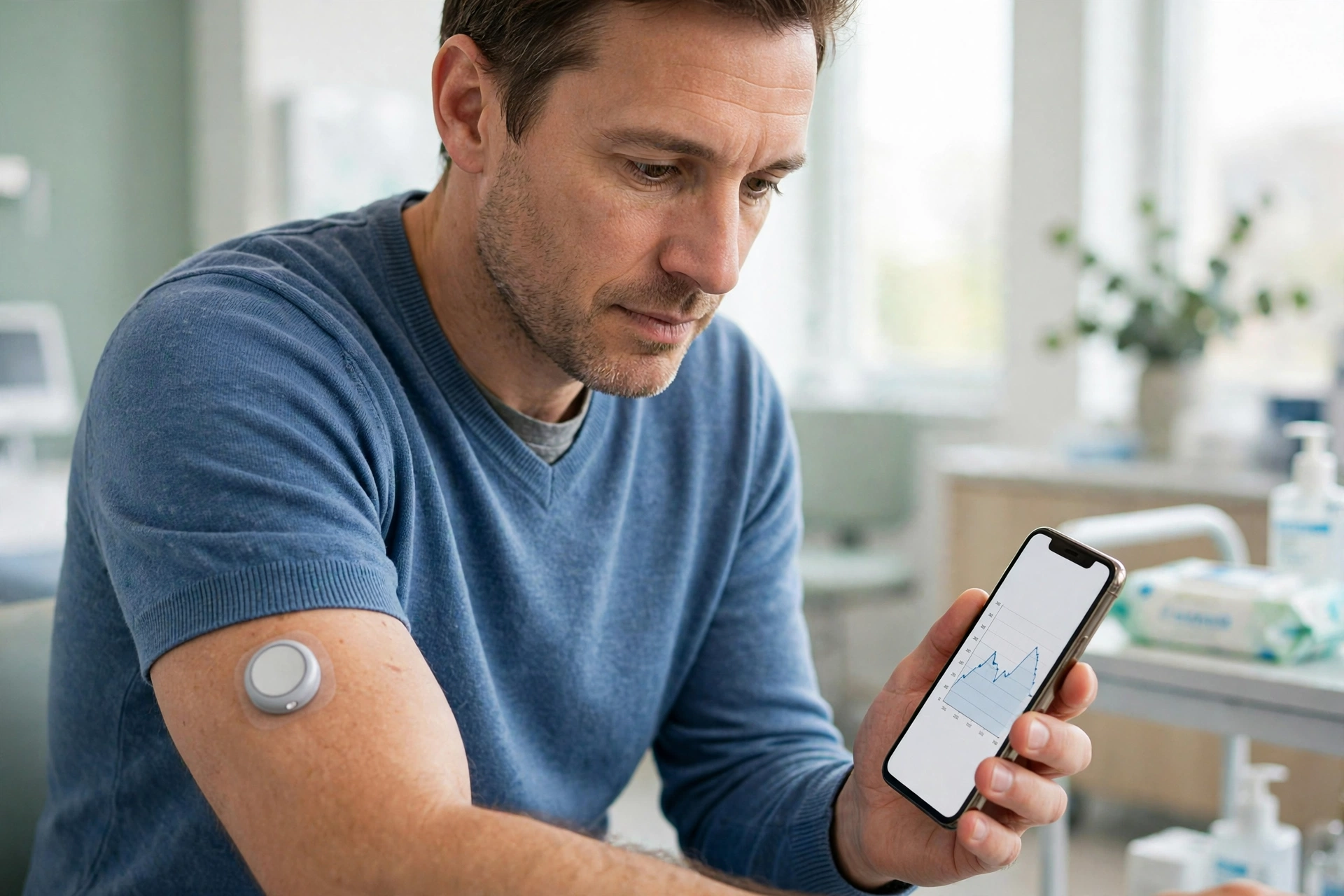
For many adults living with type 2 diabetes, the hardest part of managing blood sugar has never been a lack of effort. It has been a lack of information between finger-prick tests. A major clinical trial published in the New England Journal of Medicine now suggests that continuous glucose monitors can close much of that gap, helping adults who do not use insulin spend approximately five more hours each day in their target blood sugar range.
The findings matter because continuous glucose monitors, often called CGMs, have historically been associated mainly with people who use insulin. This trial, described as the largest of its kind, focused on a much broader group: adults with type 2 diabetes who manage their condition without insulin. For them, real-time feedback appears to change daily decisions in small ways that add up to a clinically meaningful difference.
What the trial found
According to researchers at the University of Colorado Anschutz Medical Campus, participants using a continuous monitor spent roughly five additional hours a day within the recommended glucose range compared with those receiving usual care. Spending more time in range is not an abstract metric. It is linked to a lower risk of long-term complications affecting the eyes, kidneys, nerves and heart, and it usually means fewer exhausting swings between highs and lows during the day.
The University of Colorado Anschutz summary of the study explains that the benefit appeared in adults who were not on insulin, a group that has often had limited access to the devices. That detail could influence how clinicians, insurers and health systems think about who should be offered a monitor in future.
Why continuous feedback changes behaviour
A traditional finger-prick test gives a single number at a single moment. A CGM, worn as a small sensor usually on the arm or abdomen, sends readings every few minutes to a phone or receiver. Users can see not only where their glucose is, but where it is heading, how a meal affected them, and whether a short walk after dinner genuinely flattened a spike.
That visibility can turn general advice into personal evidence. Instead of being told that white rice, stress or poor sleep may raise blood sugar, a person can watch the pattern on their own chart. Clinicians say this kind of feedback often makes conversations about food, activity and medication more concrete and less judgmental. It also helps identify overnight lows or early-morning rises that occasional testing would miss entirely.
Our recent look at why boredom can benefit the brain explored a similar theme: small, everyday mental and physical states, measured honestly, can reveal more than people expect. In diabetes care, measurement itself becomes part of the treatment.
What this does not mean
A monitor is not a cure, and the trial does not suggest that everyone with type 2 diabetes should rush to buy one without medical advice. Sensors cost money, require consistent use, and can produce anxiety if every fluctuation is treated as an emergency. Skin irritation, alarm fatigue and data overload are real concerns, and readings should still be interpreted alongside symptoms and professional guidance.
The Centers for Disease Control and Prevention diabetes resources remain a useful starting point for understanding diagnosis, prevention and daily management. Anyone considering a CGM should discuss eligibility, cost and training with their care team, particularly if they take medication that can cause low blood sugar.
Access may be the next question
The biggest debate following the trial is likely to be about access. If a device helps a large group of patients spend five more hours a day in range, restricting it mainly to insulin users becomes harder to justify. Yet expanding coverage will require health systems to weigh device costs against avoided complications, fewer hospital visits and better quality of life over years, not weeks.
There is also a practical challenge. Clinics will need time and systems to review the data patients generate. A stream of glucose readings is only useful if someone helps translate it into a plan: adjusting meals, activity, sleep routines or medication safely, rather than leaving patients alone with a chart.
The bottom line for patients
For adults with type 2 diabetes who do not use insulin, this trial offers a hopeful and unusually clear message. Continuous information can lead to measurably better days, not just better laboratory numbers months later. Five extra hours in range, repeated day after day, is the kind of improvement patients can actually feel.
As researchers follow participants for longer and health systems respond to the evidence, CGMs may move from a specialist tool to a routine part of type 2 diabetes care. For now, the study strengthens the case for asking a simple question at the next appointment: would seeing my glucose continuously help me manage it better?
