

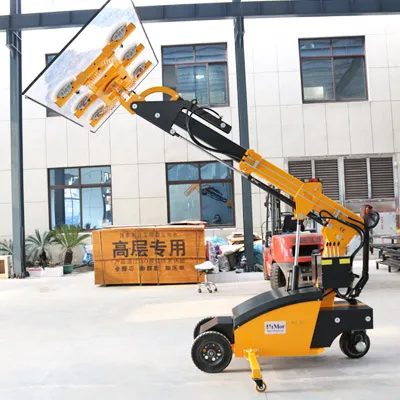
Large glass panels can be difficult to move, position, and install accurately on busy construction sites. Their size, weight, and smooth surfaces make conventional handling methods demanding, especially when panels must be placed at height or in restricted areas. Modern lifting equipment can simplify this work by providing controlled support during movement. A vacuum glass lifter is designed for this purpose, helping construction teams handle glass panels with greater control while reducing unnecessary manual effort.
Why Glass Handling Requires Better Equipment
Glass installation often involves more than simply transporting a panel from one location to another. Workers may need to rotate, tilt, lift, and position large panels against façades or inside finished spaces. Manual handling can become difficult when panels are heavy or when access around the installation point is limited.
Vacuum-based lifting equipment addresses this challenge by using suction cups to grip suitable glass surfaces. Once the lifting system establishes sufficient vacuum pressure, the equipment can support the panel while operators guide it toward the required position. This can make movement more controlled and practical for demanding installation work.
How Vacuum Glass Lifting Works
A typical vacuum lifting system uses suction pads, a vacuum pump, controls, and a supporting frame. The suction pads create a secure connection with the glass surface when the required vacuum level is reached. The lifting equipment can then move the panel through the required path.
The exact configuration depends on the equipment and application. Some systems are designed for compact indoor work, while larger machines may be suitable for substantial glass panels used in commercial construction. Buyers should therefore consider panel dimensions, weight, lifting height, and working conditions before choosing equipment.
Where These Lifters Are Useful
Construction projects can involve many situations where controlled glass movement is important. Curtain-wall installation, commercial façades, interior glazing, renovation projects, and large-window installation can all benefit from suitable vacuum lifting equipment.
For example, a project involving large façade panels may require equipment capable of handling substantial loads while reaching an elevated installation point. An indoor renovation project may instead prioritize compact dimensions and easy maneuverability. Matching the equipment to the actual working environment is therefore more important than simply choosing the largest available model.
What Buyers Should Check First
Selecting the right equipment starts with understanding the job requirements. The vacuum glass lifter should have a suitable lifting capacity for the heaviest panel that will be handled, with appropriate consideration for operating conditions.
Buyers should also examine the number and arrangement of suction cups. Different glass dimensions may require different support configurations. Lifting height, rotation capability, power source, mobility, and control systems can also influence whether a machine is suitable for a particular project.
Safety features deserve close attention as well. Vacuum monitoring, warning systems, backup arrangements, and clearly designed controls can help operators manage the equipment more effectively. Manufacturer documentation should explain operating limitations and recommended procedures.
Where Robotic Assistance Can Help
Some modern glass-handling systems incorporate powered or semi-automated movement to make positioning easier. In this context, searches for a robot vacuum machine may refer to equipment that combines vacuum gripping with powered movement for handling glass or similar panels.
The important point is to distinguish industrial lifting technology from household robotic cleaning products. Construction equipment needs to be evaluated according to load capacity, vacuum performance, maneuverability, working height, and application requirements rather than consumer-oriented features.
Manual Handling Versus Vacuum Lifting
Manual handling can remain practical for small and lightweight glass pieces, particularly where access is straightforward. Larger panels present a different challenge because the consequences of poor positioning can be more significant and the physical effort can increase considerably.
Vacuum lifting equipment provides a dedicated method for supporting and maneuvering suitable panels. It can also help improve workflow when repeated glass movement is required across a construction project. However, the equipment still requires trained operators, appropriate inspection, and compliance with relevant workplace procedures.
Making the Right Equipment Choice
The best solution depends on the project rather than a single specification. Before purchasing, construction teams should identify the typical glass weight and dimensions, required lifting height, installation location, surface characteristics, available power, and expected frequency of use.
A manufacturer with experience in lifting equipment can also help buyers determine whether a particular configuration fits their application. Asking detailed questions before ordering can prevent mismatches between equipment capabilities and actual site requirements.
Conclusion
Effective glass handling depends on having equipment that matches the panel size, working environment, lifting requirements, and installation method. A vacuum glass lifter can provide controlled support for suitable glass panels while making demanding handling tasks more manageable. Buyers should evaluate capacity, suction configuration, mobility, safety systems, and operating requirements before making a decision. For businesses exploring suitable industrial lifting solutions, HimorLift.com offers lifting equipment options that can be considered according to specific project needs and applications.
