

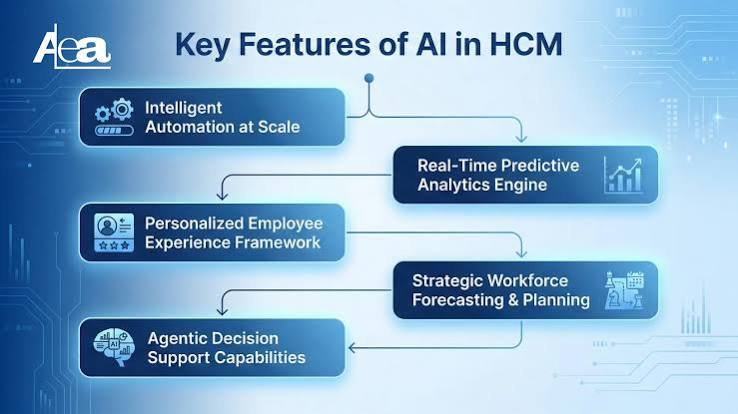
Workforce management has evolved into a strategic business function that directly influences productivity, employee engagement, and organizational growth. As businesses expand across departments and locations, managing people through disconnected systems often creates delays, inconsistent records, and unnecessary administrative effort. A connected HR environment enables organizations to respond faster while maintaining greater operational control through human capital ERP software.
Rather than relying on separate applications for payroll, attendance, recruitment, and employee records, organizations benefit from a unified platform that keeps information synchronized across every HR process. This approach improves decision-making, strengthens compliance, and gives leadership teams reliable visibility into workforce performance without increasing manual workloads.
Why Integrated Workforce Management Delivers Better Results
Every employee interaction generates valuable information that supports business decisions. Recruitment records, attendance logs, leave balances, payroll data, performance reviews, and training history all contribute to a complete workforce picture. When these records exist in isolated systems, maintaining accuracy becomes increasingly difficult as organizations grow.
An integrated HCM environment connects every stage of the employee lifecycle through shared information and standardized workflows, reflecting modern tech trends focused on automation, efficiency, and data-driven decision-making. HR professionals spend less time correcting duplicate records while managers gain faster access to meaningful insights that support planning, budgeting, and workforce development.
Centralizing Employee Information
Maintaining one secure employee profile simplifies record management throughout the employment journey. Personal details, employment history, qualifications, attendance records, payroll information, and organizational assignments remain updated within one connected environment, reducing administrative complexity while improving data consistency.
Improving Organizational Visibility
Business leaders require reliable workforce information before making operational decisions. Comprehensive dashboards provide meaningful insights into staffing levels, attendance patterns, workforce distribution, and performance trends, allowing management teams to identify priorities before challenges begin affecting productivity.
Creating Stronger Recruitment and Onboarding Experiences
Recruitment influences long-term organizational success because every hiring decision shapes future performance. Structured hiring processes improve candidate evaluation while reducing delays that often occur during manual coordination between HR teams and department managers.
A digital recruitment workflow helps organizations manage applications, interview schedules, evaluation forms, document collection, and onboarding activities within one connected process. New employees experience smoother transitions while HR professionals maintain greater consistency throughout hiring operations.
Standardizing Talent Acquisition
A structured recruitment process supports fair evaluations by applying consistent hiring practices across every position. Digital workflows reduce paperwork, simplify collaboration among hiring managers, and improve documentation throughout candidate selection and onboarding activities.
Building Better Employee Experiences From Day One
Successful onboarding extends beyond completing employment paperwork. New employees benefit from organized orientation schedules, document management, policy acknowledgments, role assignments, and early performance planning that encourage faster integration into daily operations.
Simplifying Everyday HR Administration
Administrative responsibilities consume significant HR resources when routine activities depend on manual processing. Leave approvals, attendance verification, employee record updates, payroll coordination, document storage, and reimbursement requests often require multiple follow-ups that slow overall efficiency.
Digital workflow automation minimizes repetitive tasks while improving consistency across daily HR operations. Employees complete many standard requests independently through self-service capabilities, allowing HR teams to dedicate more attention to workforce planning, employee engagement, and organizational development.
Operational improvements commonly include:
- Employee self-service functionality
- Digital leave management
- Attendance and time tracking
- Payroll administration support
- Document management
- Configurable approval workflows
- Employee profile management
Planning for a More Agile Workforce
Business growth rarely follows a predictable path. Expanding operations, entering new markets, or restructuring departments all require organizations to evaluate workforce capacity before making strategic decisions. Reliable planning depends on accurate employee information that reflects current skills, organizational structures, and operational demands rather than assumptions.
An integrated workforce planning approach gives leadership teams the ability to forecast staffing needs, identify capability gaps, and allocate talent more effectively. Access to connected workforce information supports informed planning while helping organizations maintain productivity during periods of expansion or organizational change.
Aligning Workforce Strategies With Business Goals
Successful organizations connect workforce planning with broader business objectives instead of treating HR as an isolated function. Managers can evaluate available talent, anticipate future hiring requirements, and assign responsibilities according to employee capabilities, ensuring business priorities remain supported as operations evolve.
Using Workforce Analytics for Better Decisions
Meaningful analytics transform workforce information into practical insights that support executive planning. Attendance trends, staffing levels, performance indicators, and employee development metrics help decision-makers recognize opportunities for improvement while strengthening long-term workforce strategies.
Useful workforce reporting often includes:
- Department performance metrics
- Recruitment progress tracking
- Employee development reports
- Attendance analysis
- Organizational structure reporting
- Workforce planning dashboards
Supporting Compliance Through Organized HR Processes
Every organization must manage employment regulations, internal policies, payroll requirements, and workforce documentation with consistency. As teams grow larger, maintaining accurate employee records becomes increasingly difficult without standardized digital processes that reduce administrative errors.
A centralized HCM platform strengthens governance by organizing documentation, maintaining secure employee records, and supporting configurable approval workflows. Controlled access to sensitive information helps organizations improve accountability while simplifying internal reviews and compliance-related activities.
Preparing Businesses for Sustainable Growth
Organizations seeking long-term success require technology that grows alongside changing workforce demands. Scalable HCM solutions support expanding teams, multiple business locations, evolving reporting structures, and increasingly complex HR operations without disrupting existing business processes.
Cloud-based workforce management also improves accessibility by allowing authorized employees and managers to complete essential HR activities from virtually any location. Greater flexibility, combined with connected workforce information, creates a stronger operational foundation that supports efficiency, collaboration, and informed decision-making across the organization.
Final Thoughts
Could workforce management become a strategic advantage instead of an administrative challenge? Businesses that invest in integrated HR technology position themselves to improve operational efficiency, strengthen employee experiences, and support informed decision-making across every stage of the workforce lifecycle. In the middle of this transformation, ePROMIS provides comprehensive HCM capabilities that include payroll, recruitment, employee self-service, talent management, workforce planning, document management, and analytics within a unified platform. Organizations looking for HCM ERM software in UAE can benefit from a connected solution designed to support sustainable business growth while simplifying complex HR operations.
