

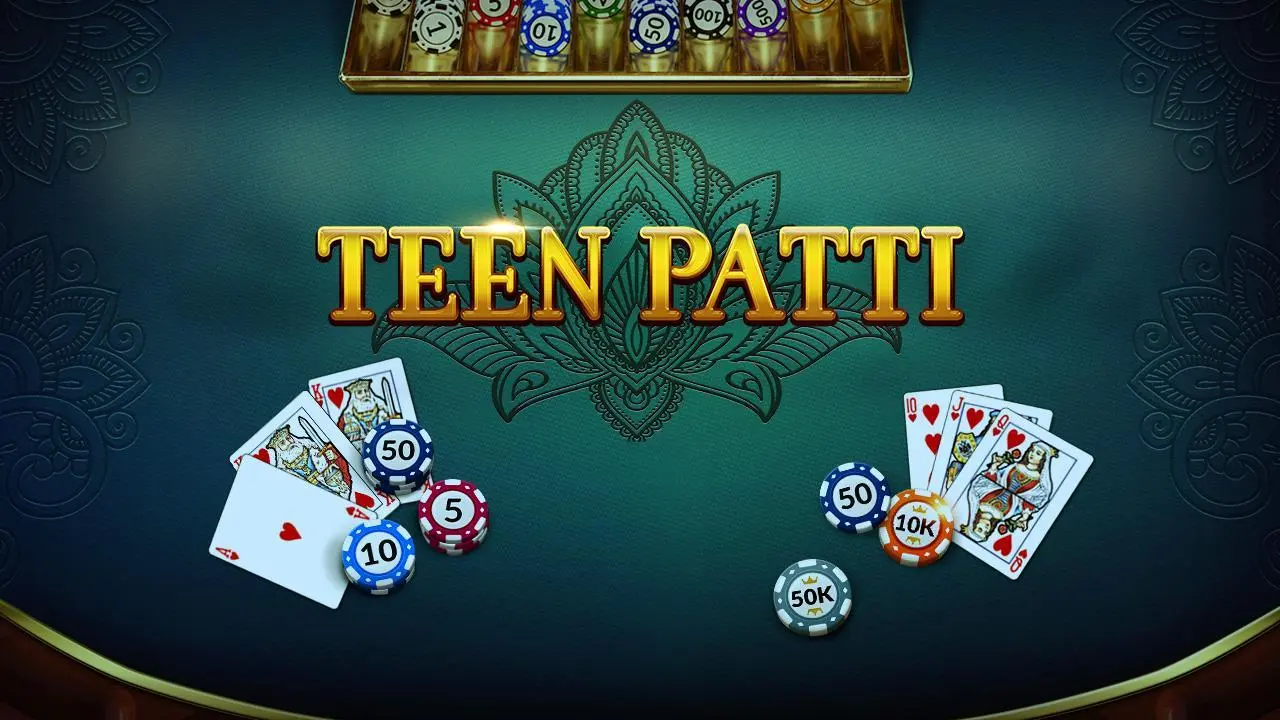
Teen Patti condenses the tension of poker-style betting into three cards and a single showdown, making every decision feel immediate and high-impact. When that structure moves into digital and casino-style environments, the game’s speed and simplicity amplify both excitement and the rate at which bankrolls rise or fall.
Why Teen Patti Works as a One-Hand Burst Game
Teen Patti literally means “three cards” in Hindi and is played with a standard 52-card deck, usually by three to six players who each receive exactly three cards. The objective is straightforward: hold the best three-card hand or convince opponents to fold before showdown, compressing the entire arc of risk, bluff, and resolution into a single compact sequence. This design makes each hand feel self-contained, so players repeatedly experience a full narrative without needing long sessions to see the game’s dynamics unfold.
Because all cards are dealt at once and there are no shared community cards, decision-making concentrates on two axes: perceived hand strength and reading opponent behaviour. That focus keeps rules accessible to newcomers while still leaving room for skill through betting, folding, and timing, which explains why the format adapts so easily to quick, casual play and to structured cash games.
Hand Rankings and Their Strategic Implications
The ranking system in Teen Patti determines which holdings justify aggression and which hands rely more on bluffing or positional advantage. Standard ordering from strongest to weakest is: three of a kind (often called Trail or Trio), straight flush (pure sequence), straight (sequence), flush (colour), pair, and high card. Because every player has only three cards, the probability of each category is markedly different from five-card poker, which reshapes what “strong” really means in practice.
For example, trails are extremely rare, with probability estimates around 0.24%, while pure sequences sit near 0.22%, making both worthy of heavy betting pressure when held. By contrast, high-card hands occur in more than 70% of deals, which means most decisions happen in a zone where no player holds a premium combination and betting behaviour becomes more informative than card strength alone. This imbalance encourages psychology-driven play, because the math ensures that everyone frequently operates from marginal positions.
Mechanisms: Blind vs Seen and Pot Growth
The betting structure in Teen Patti revolves around whether players are “blind” (not looking at their cards yet) or “seen” (having checked their hand). All players post an initial ante into the pot, establishing a base stake, and then act in turn either to fold, continue as blind, look at their cards, or raise according to status-dependent limits. Blind players typically may wager between the current stake and twice that amount, while seen players must commit between twice and four times the current stake, reflecting their informational advantage.
Because blind bets are cheaper, staying blind allows a longer presence in the pot with weaker average holdings, at the cost of less precise information about when to apply pressure or escape. As the current stake rises each time someone increases the bet, the pot grows in geometric steps rather than smooth increments, so a few aggressive actions can quickly turn a small ante pot into a meaningful contest. This structure ties informational choices directly to pot size, ensuring that every decision about looking, betting, or folding has visible economic consequences.
How Teen Patti Differs from Poker in Practice
While Teen Patti and poker share family traits—hand rankings, betting, bluffing—the rhythm and risk structure diverge in multiple ways. Poker variants like Texas Hold’em use community cards and multiple betting rounds, giving players many opportunities to adjust strategy as new information appears, whereas Teen Patti resolves largely with information fixed at the deal, modulated only by whether players choose to see their cards. This means early decisions in Teen Patti carry more weight, as there is no flop, turn, or river to repair a marginal start.
A second key difference lies in betting symmetry. In poker, all active players must eventually equalize bets to see a showdown, but Teen Patti’s structure allows situations where a show is triggered between only two remaining players and is purchased by one of them, with no requirement for fully matched stacks in prior rounds. That asymmetry concentrates risk into pivotal moments and can reward those who time requests for a show when opponents appear uncomfortable or overextended, a nuance that does not map cleanly onto standard poker logic.
Where the Three-Card Format Strengthens and Weakens Play
The three-card limit strengthens accessibility because players do not have to memorise long lists of five-card combinations or multi-street bet sizing concepts. Hands are easy to evaluate at a glance once rankings are internalised, and decisions revolve around a small set of choices—bet, match, raise, fold, or request a sideshow—making it intuitive even in noisy social environments. This simplicity has fuelled Teen Patti’s adoption at parties, festivals, and family gatherings, where the goal is as much conversation as it is competition.
However, that same simplicity can limit depth for players seeking intricate long-term edges. With only three cards and heavily luck-driven distributions of premium hands, long-run expected value mostly depends on managing bet sizes, exploiting position, and reading opponents’ emotional patterns, rather than engineering complex structural advantages. Over many hands, the distribution of top-tier holdings remains relatively flat across players, so those who overestimate their ability to “outplay the deck” can become overconfident and accept stakes that variance cannot justify.
Teen Patti in Real-World and Online Settings
In offline settings across India and neighbouring regions, Teen Patti often appears during festivals and holidays, where small-stakes games create shared narratives and friendly rivalries. Social norms in these games frequently adjust rules informally—tweaking wild cards, side bets, or maximum stakes—to match the group’s risk tolerance and appetite for experimentation. That flexibility supports cultural continuity but also means that players moving between groups must adapt quickly to local interpretations.
Online implementations, by contrast, enforce strict, explicit rule sets with no room for on-the-fly reinterpretation, which reduces disputes and supports real-money wagering at scale. Digital versions add lobbies, table selection by stake size, and multi-table play, allowing users to jump between casual and high-stakes tables in seconds. This increased convenience also accelerates hand volume, so what once unfolded over an evening of social play can now occur within minutes, magnifying both opportunity and financial risk.
UFABET and Cross-Vertical Viewing of Three-Card Risk
In modern gambling environments that bundle multiple activities into one account, Teen Patti often sits alongside sports betting, slots, and other table games under a single balance. When a sports betting service provides unified reporting across these products—similar in spirit to how users experience consolidated statements on UFABET—players can see how much volatility originates from fast three-card rounds versus slower markets. That aggregated visibility encourages more deliberate segmentation of funds, because it becomes clear when Teen Patti sessions account for a disproportionate share of both big wins and sharp downturns.
casino online Ecosystems and Teen Patti’s Position
Within today’s broader digital gambling landscape, Teen Patti has moved from regional favourite to a regular entry in card game menus, often alongside baccarat and poker variants. On a large casino online website, the game benefits from structured tutorials, demo modes, and clear displays of hand rankings that shorten the learning curve for international users encountering it for the first time. This structured onboarding, combined with multi-language support and variable-stake tables, allows Teen Patti to serve as both a cultural ambassador and a practical entry point into card-based wagering.
Educational Perspective: Teaching Teen Patti for Applied Understanding
An educational approach to Teen Patti starts by anchoring the game in familiar concepts from poker while highlighting where the mapping fails. Presenting the six key hand categories in a concise table—Trio, Pure Sequence, Sequence, Colour, Pair, High Card—helps learners rank outcomes visually and understand which holdings justify aggressive betting across typical situations. Once rankings are clear, instructors can introduce probability estimates for each category to show why patience around premium hands and restraint with medium-strength holdings matter over many rounds.
A second teaching layer focuses on blind versus seen play and its impact on the pot. By walking through sample hands where blind players stay cheap in early betting but face bigger leaps once they look at their cards, learners see how information choices translate into cost. Comparing sequences where a player remains blind until late versus sequences where they look early and fold quickly demonstrates how different styles affect both variance and perceived table image, giving new players concrete models for shaping their own approach.
Summary
Teen Patti earns its reputation as a thrilling three-card Indian game by compressing hand evaluation, bluff, and resolution into a single, high-intensity arc that repeats rapidly. Structured hand rankings and blind-versus-seen betting rules connect card strength directly to pot growth, making each decision about looking or staying blind a meaningful trade-off between information and cost. When adapted into online and casino-focused ecosystems, Teen Patti’s speed and simplicity make it both accessible and potentially hazardous for unmanaged bankrolls, which is why understanding its mechanics, probabilities, and session-level impact is essential for anyone drawn to its “three cards and done” appeal.
